
Active Ingredients in
Men's Skincare Explained
The essentials: Salicylic Acid clears pores from inside. Niacinamide controls oil and evens tone. Ceramides repair the skin barrier. Gel cleansers suit oily skin, cream cleansers suit dry. Used together these ingredients address every major skin concern men face.
What are Active Ingredients and Why Do They Matter?
Most skincare products contain two types of ingredients: actives and supporting ingredients. Supporting ingredients -- water, emollients, emulsifiers -- create the texture, feel, and delivery system of a product. Active ingredients are the compounds that actually produce a measurable, documented change in skin. They are why a product works beyond basic hydration.
For men, the most relevant actives address four things: excess oil production, clogged pores and breakouts, skin barrier integrity, and uneven tone or texture. Understanding which ingredient addresses which problem removes the guesswork from building an effective routine.
Salicylic Acid
Oil-soluble. Penetrates inside pores and dissolves sebum plugs. Best for oily, acne-prone, or congested skin. Anti-inflammatory properties reduce redness.
Niacinamide
Regulates sebum production, minimises pores, reduces melanin transfer, and strengthens the skin barrier. Well-tolerated by all skin types including sensitive.
Ceramides
Natural lipid molecules that form the skin barrier. Prevent transepidermal water loss. Topical ceramides rebuild a compromised barrier and restore skin resilience.
L-Ascorbic Acid
Antioxidant protection against UV damage. Inhibits melanin production for brightening. Stimulates collagen synthesis. Use in the morning before SPF.
The rule for combining actives: Introduce one new active at a time, two weeks apart. When something causes irritation, you know exactly which ingredient is responsible. Adding multiple actives simultaneously makes troubleshooting impossible.
Is It Safe to Use Salicylic Acid Face Wash Every Day?
The answer depends on concentration, product format, and your skin type. Salicylic Acid is one of the most effective ingredients available for men with oily or acne-prone skin -- but the question of daily use is nuanced and getting it wrong leads to over-exfoliation, barrier disruption, and paradoxically, worse breakouts.
Cleanser (0.5-2%)
Daily use: generally safe. Rinse-off format limits contact time significantly. At 0.5-1%, daily use is appropriate for oily and acne-prone skin. Even at 2%, most men tolerate daily cleansing well. If dryness occurs, reduce to once daily or every other day.
Leave-on (0.5-2%)
Daily use: caution advised. Toners, serums, and spot treatments stay on skin and provide prolonged contact time. Daily leave-on Salicylic Acid is appropriate for very oily skin but can cause dryness, tightness, and barrier disruption for most men. Start 2-3 times per week.
Signs you are using too much Salicylic Acid: persistent dryness or tightness, skin feeling raw or sensitive, increased rather than decreased breakouts (your barrier is compromised), and redness that does not resolve between applications. If any of these occur, reduce frequency immediately and focus on barrier repair with ceramides and hyaluronic acid for two weeks.
Important: Salicylic Acid increases photosensitivity. Morning application requires SPF follow-up without exception. Night application is generally preferred for leave-on products to avoid this requirement.
Full guide to daily Salicylic Acid use -- which concentration is right for your skin, when to use a cleanser versus a serum, and how to know if you are overdoing it.
Read: Is it safe to use Salicylic Acid face wash every day?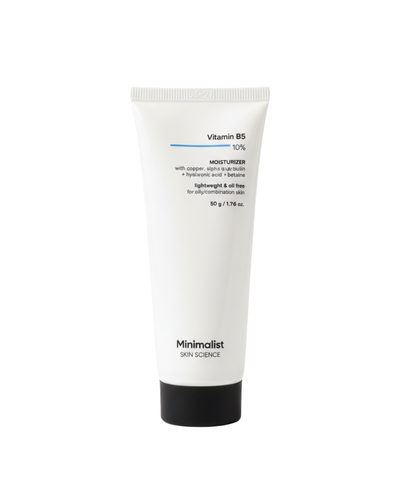
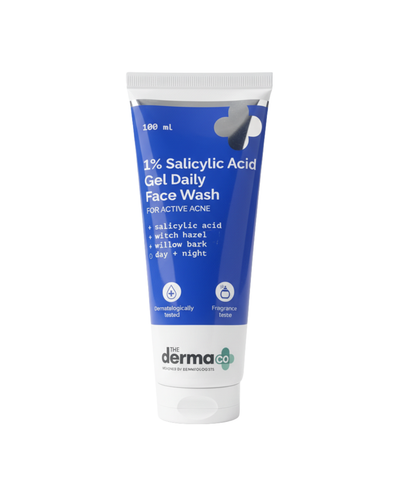
2% Salicylic Acid vs Niacinamide for Men's Acne
This is one of the most common comparisons in men's skincare -- and it is slightly the wrong question. Salicylic Acid and Niacinamide do not do the same job. They work at different points in the acne cycle and are significantly more effective used together than either is alone. But if you are starting with one, here is how to decide.
Salicylic Acid 2%
Best for: Active breakouts, blackheads, congested pores, oily skin with frequent acne. Works by directly clearing the pore of sebum and dead cell buildup. Faster visible impact on existing congestion -- results within 2-4 weeks.
Niacinamide 10%
Best for: Preventing future breakouts, oily skin, post-acne marks, large pores, sensitive skin that cannot tolerate Salicylic Acid. Works by reducing sebum production at source. Slower but more sustained results -- 4-8 weeks for full effect.
The most effective acne-control stack for men uses both: Salicylic Acid to clear existing congestion and Niacinamide to reduce the oil production that causes it. Salicylic Acid is the immediate fix, Niacinamide is the long-term prevention. They are complementary, not competing.
Can they be used together? Yes. Apply Niacinamide after Salicylic Acid has fully absorbed. There is no chemical incompatibility between them and the combination is well-supported by dermatological practice for oily and acne-prone skin.
Full head-to-head comparison with concentration guide, timing, and the exact routine stack for men with persistent acne.
Read: 2% Salicylic Acid vs Niacinamide for men's acne: which is better?How Long Does Niacinamide Take to Work on Men's Skin?
Niacinamide is one of the most well-tolerated actives available and one of the most misunderstood in terms of timeline. Men often abandon it after two weeks because they do not see dramatic results. The reality is that different benefits of Niacinamide appear on different timelines, and the most significant effects require consistent use over two to three months.
Week 1-2 -- Hydration and texture
Skin feels more hydrated. Surface texture begins to smooth. Redness from existing breakouts may reduce slightly.
Week 3-4 -- Oil control begins
Sebum regulation becomes noticeable. Skin stays less oily through the day. Pores appear slightly smaller due to reduced oil production.
Week 5-8 -- Pore minimising and barrier strengthening
Pore size visibly reduced. Skin barrier measurably stronger -- less reactive to environmental irritants. Breakout frequency decreasing.
Week 8-12 -- Brightening and tone evening
Post-acne marks and hyperpigmentation begin to fade. Melanin transfer reduction produces more even overall skin tone. This is Niacinamide's most valued long-term benefit for men.
Week 12+ -- Full sustained effect
All benefits fully established. Oil production normalised. Pores at their smallest. Skin tone most even. Consistent daily use maintains these results indefinitely.
Complete timeline with what to expect each week, why most men give up too early, and how to stack Niacinamide for faster results.
Read: How long does it take for Niacinamide to work on men's skin?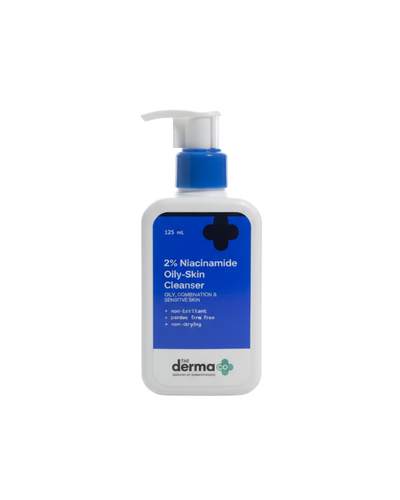
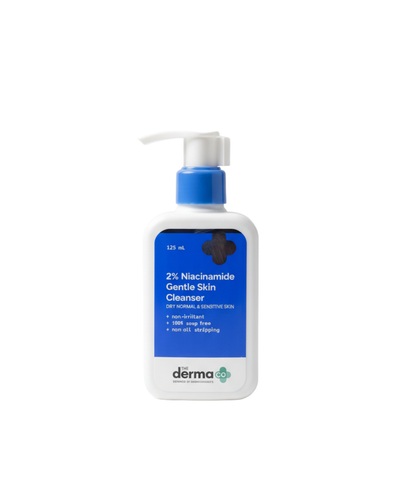
Niacinamide and Ceramides: Strengthening the Men's Skin Barrier
The skin barrier -- also called the lipid barrier or stratum corneum -- is the outermost layer of skin. It is made up of skin cells held together by lipid molecules including ceramides, cholesterol, and fatty acids. When this barrier is intact, skin retains moisture, resists irritants, and stays clear. When it is damaged, everything gets worse -- dryness, sensitivity, breakouts, and inflammation all increase simultaneously.
Niacinamide's role
Stimulates ceramide synthesis in the skin -- meaning it prompts your skin to produce more of its own barrier lipids. Also reduces transepidermal water loss (TEWL) and strengthens the barrier from within. Works best as a preventative and maintenance ingredient.
Ceramides' role
Directly replenish the lipid molecules that form the barrier. Topical ceramides integrate into the stratum corneum and immediately begin filling gaps caused by damage. Work best as a repair ingredient when the barrier is already compromised.
Used together, they work on two timescales: ceramides in your moisturiser provide immediate barrier support while Niacinamide builds long-term resilience by increasing your skin's own ceramide production. This combination is particularly valuable for men using Retinol, Salicylic Acid, or any exfoliant that increases barrier disruption risk.
Signs of a damaged barrier: Persistent dryness despite moisturising, skin feeling tight after cleansing, increased sensitivity or stinging when applying products, more frequent or worsening breakouts, and redness that does not resolve quickly.
Complete guide to the men's skin barrier -- how to tell if yours is damaged, how to repair it, and how to keep it strong with the right ingredient combinations.
Read: Niacinamide and Ceramides: Strengthening the men's lipid barrierGel Cleanser vs Cream Cleanser: Which Does Your Skin Need?
Your cleanser is the foundation of your entire routine. Every other product you apply goes on skin that has been cleansed -- which means the cleanser determines the condition your skin is in when it receives everything else. Choosing the wrong cleanser type undermines every product that follows it.
Gel cleanser
Best for: Oily, combination, and acne-prone skin. Water-based, foaming formula removes excess sebum effectively. Leaves skin feeling clean and fresh without residue. Can be drying for dry or sensitive skin types if used twice daily.
Cream cleanser
Best for: Dry, sensitive, and mature skin. Richer formula cleans while maintaining moisture. Does not strip natural oils. May leave a slight film that feels heavy on oily skin. Preserves the barrier better than foaming cleansers.
The key indicator: how does your skin feel 10 minutes after washing? If it feels tight, dry, or uncomfortable -- your cleanser is stripping too much. Switch to something gentler or move from gel to cream. If your skin feels comfortable and balanced, your cleanser is appropriate. If it feels heavy or greasy, you need something that removes more oil.
For combination skin: A balanced gel cleanser -- one that foams lightly rather than aggressively -- is usually the best compromise. Avoid cream cleansers if your T-zone is significantly oily, but avoid harsh foaming cleansers if your cheeks are prone to dryness.
Side-by-side comparison of every cleanser type with specific product recommendations for each skin type and lifestyle.
Read: Gel cleanser vs cream cleanser: which does your skin need?